This guide will help you navigate the SOC 2 Type 2 audit process and ensure you're fully prepared for success.
Understanding Type 2: What's Different?
Type 1 vs Type 2: The Key Difference
Type 1: Evaluates whether controls are suitably designed at a specific point in time.
Type 2: Evaluates whether controls operated effectively throughout a defined period (typically 3-12 months).
Already Completed Type 1?
If you have already completed a Type 1 audit, much of the heavy lifting has been done through configuring the necessary systems, publishing policies, and personnel onboarding. The focus for Type 2 is maintaining and demonstrating ongoing operational effectiveness.
New to SOC 2? If you have not completed a Type 1 previously, please refer back to the guidance in the Drata SOC 2 Type 1 Quick Start Guide to ensure your foundational setup is complete before beginning your Type 2 journey.
1: Set Up Your Audit in Drata
Your audit period is the timeframe your auditor will examine.
Recommended Timeline
Audit Period Length: We recommend starting with a 3-month observation period for your first Type 2 audit. If you have completed a Type 2 audit already, we typically advise that clients move into a 12-month observation period.
Scheduling Best Practices: Begin your audit period on the first day of the month and end on the last day of the month. If transitioning from Type 1, start your Type 2 period as close to or before your Type 1 report date as possible.
Backdating Option: You have the option to backdate the observation period, as long as the necessary Drata configurations were in place during that time. Consult with your auditor if you're unsure whether backdating is appropriate.
Create Your Audit Package
1. Navigate to the Audit Hub tab and select Create Audit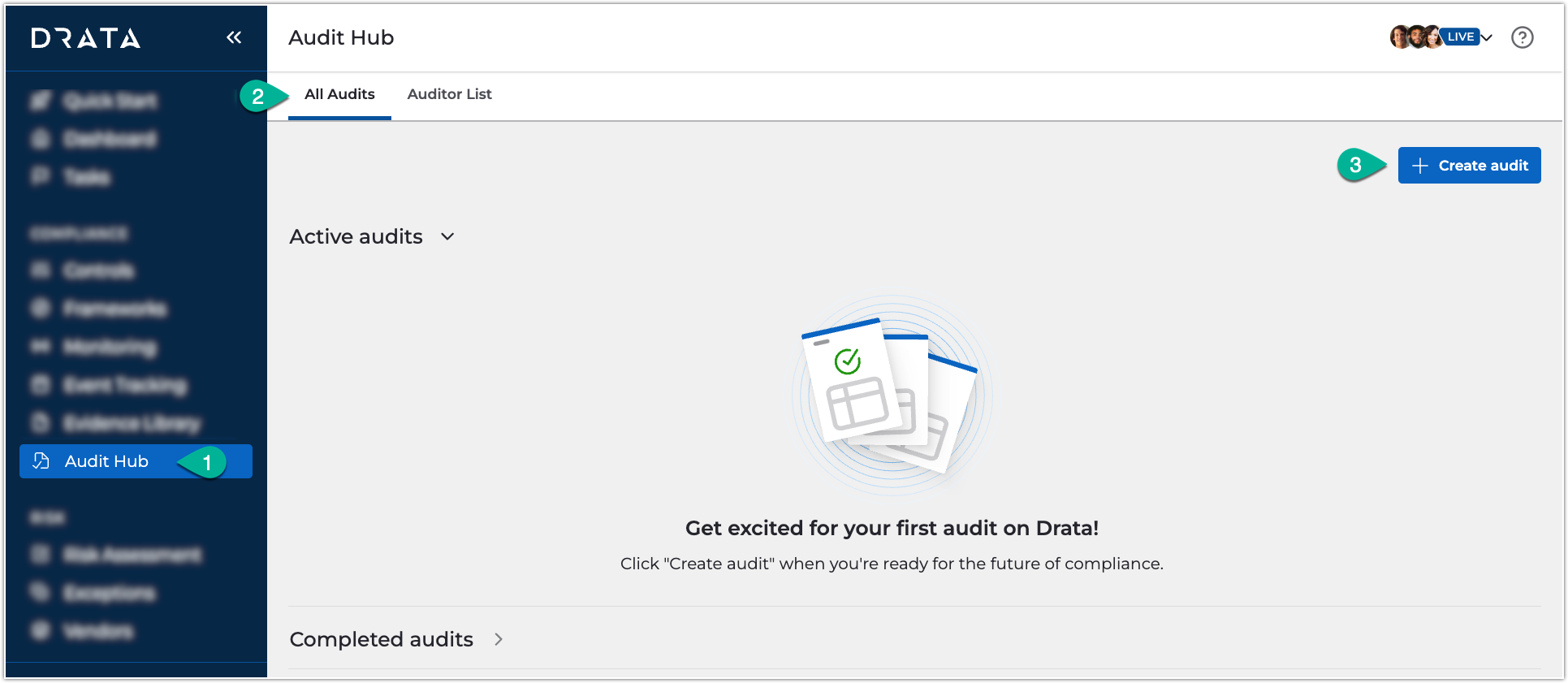
2. Configure your audit parameters:
-
-
- Audit type: SOC 2 Type 1 or Type 2
- Audit period: Select your observation timeframe (dates can be adjusted later if needed)
-
3. Invite auditors using the dropdown menu or send new invitations as needed
Grant Sensiba Auditor Access
Once your audit is created, provide access to enable immediate support:
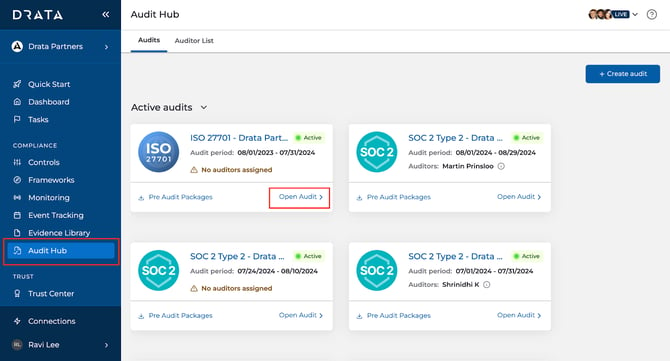
- Navigate to Audit Hub → Open Audit
2. Select the edit icon under Assigned Auditors.
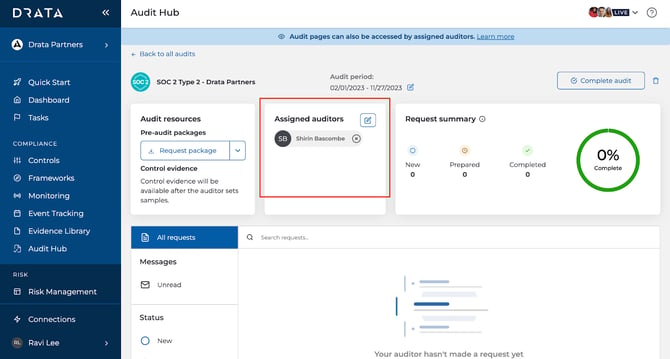
3. Add your auditors:
- GRC Operations - grc@drata.sensiba.com - our AI audit assistant
- Your assigned Lead Auditor (your CSM will share this information with you on your kick off call).
4. Enable the following permissions for all auditors:
- Read-only access
- Download permission for Controls, Tests and Requirements
💡 Need a step-by-step? Watch the Drata Audit Hub Overview for a walkthrough of the setup process.
💡 Notify your auditor once these steps are completed.
2. Scope your Controls
Drata comes with a broad set of default controls, but you don't need all of them for your audit.
- Your audit with us only requires a subset of controls.
- There are approximately 50 controls relevant for Security, Availability, and Confidentiality Trust Service Criteria. We've included Processing Integrity & Privacy; however these are not tested by default.
- Controls that are NOT on the guidance document provided below, can safely be marked as 'Out of Scope' in Drata. This is not a requirement, just a recommended practice for new clients.
📖 Download Sensiba's SOC 2 Control Framework Guide here (updated June 23rd, 2026)
💡 Please note, the auditors will assess the requirements within the context of the audit scope and may request additional evidence if appropriate.
💡Need help scoping in controls? Drata Frameworks video shows you how to work with frameworks in Drata.
Step 3: Maintain Evidence Throughout Your Audit Period
Type 2 requires continuous evidence collection across your entire observation period, with sample evidence needed for population-based and period controls. Key areas of focus include:
Population-Based Controls
Maintain documentation for all instances that occur during your audit period:
- New hires: Background checks, policy acknowledgments in Drata, onboarding checklists documenting system access approval
- Terminations: Offboarding checklists, system access revocation documentation, device return confirmation
- Code changes: Change tickets with documented testing, approval, and resolution for all production releases
- Incidents: Tickets with clear response, resolution, and RCA documentation in your ticketing system
- Personnel Compliance: Ensure that all in scope employees are compliant with policies, hard-disk encryption and anti-virus
Periodic Controls
- Business Continuity / DR test: Annual testing of disaster recovery and business continuity plans. Specifically, showing the restoration of IT systems and critical data after a hypothetical disaster.
- Incident Response test: Annual testing of incident response procedures through the simulation of the response to an example scenario (eg Phishing attack) and the documentation of the lessons learned.
- Risk assessment: Annual organizational risk assessment.
- Penetration test: Annual penetration testing (if applicable).
- Security awareness training: Annual completion of security training by all employees.
- Access reviews: Documented reviews per the frequency defined in your access policies.
- Vendor reviews: Annual review of SOC 2 reports for critical subservice organizations.
What to Expect During Your Type 2 Audit
AI Assessment
Your auditor will run the AI review of your Drata instance and share the Type 2 workpaper with all outstanding controls.
Evidence Requests
Your auditor will request evidence for population-based controls approximately 2 weeks before your audit period ends to ensure accurate sampling.
Sampling Methodology
Sample sizes are determined by population size.
Non-Occurrences
If no instances of a population-based control occurred during your audit period (e.g., no new hires, terminations, or security incidents), the control will be marked as a "non-occurrence" in your report. This is a standard audit notation and does not reflect negatively on your compliance.
Tips for Success
- Leverage Drata's monitoring and compliance dashboard weekly to identify issues early
- Schedule annual controls early in your audit period
- Contact your auditor if you have questions about specific control requirements